Building Management beyond PSIM and HVAC

There is growing need from building managers to drive efficiencies and deliver a new kind of work environment. Using IoT technology is ideally suited to provide and improve the operation of a building beyond the management of PSIM (Physical Security Management), and HVAC (Heating Ventilation and Air Conditioning).

SmartX Buildings Management

SmartX is a smart, configurable ecosystem of applications that provides a rich architecture solution for Physical Security Information Management, IoT infrastructure and Integrated Building Management applications. PSITech is designed for large system applications; it takes care of the entire system life cycle from the subsystems to the data application management. PSITech provides a uniform model of object encapsulation throughout the communication channel and all connected infrastructure. The platform facilitates an integrated, multiple vendor, multiple tenant, multiple site, next generation PSIM and IoT applications environment. 

  • Automatically detect devices.
  • Eliminate Human Error by capturing all your proprietary business processes and automating decision making.
  • Provides an electronic evidence bank that allows for reconstructing of events and how they occurred.
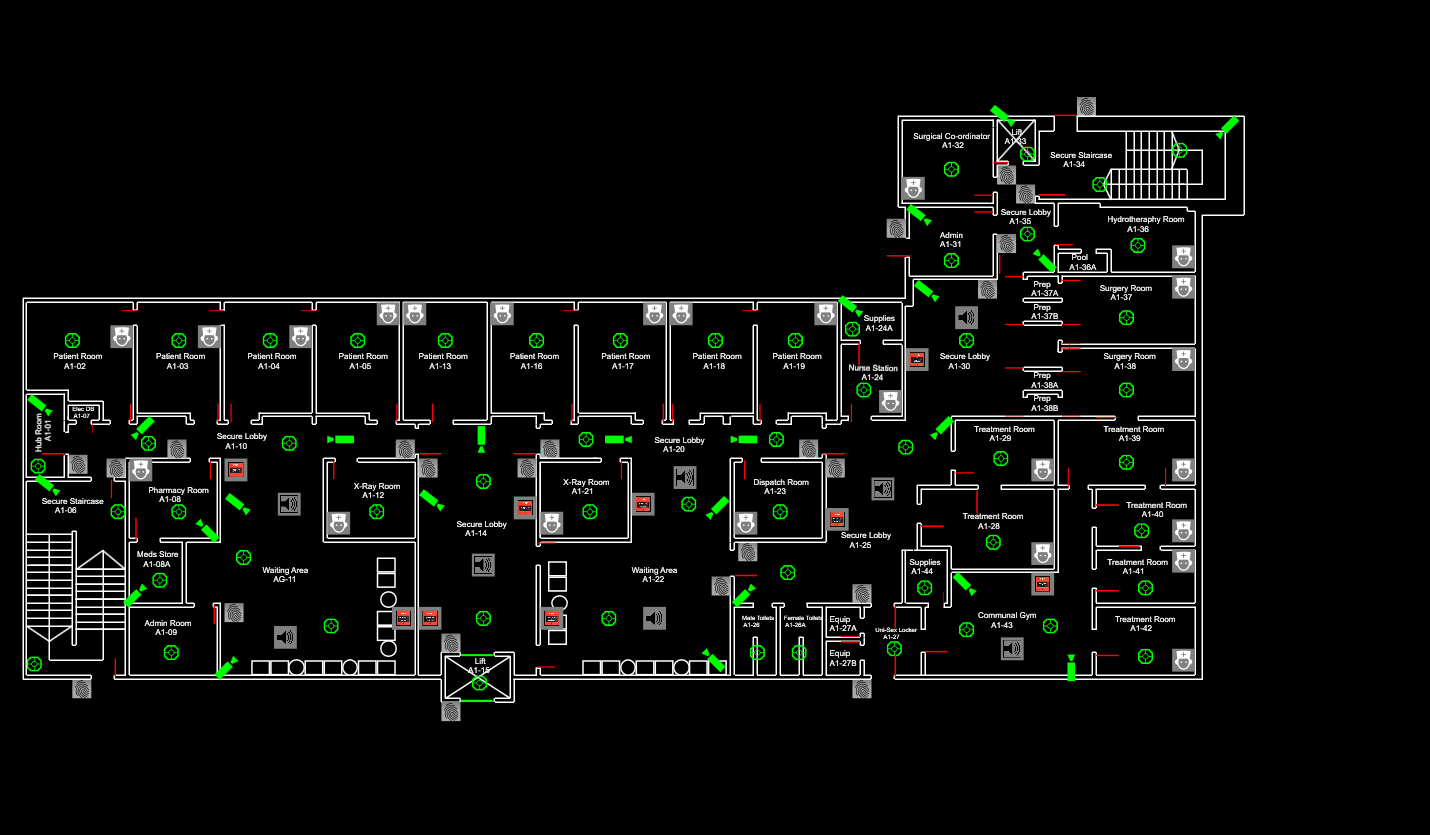
  • Allows unlimited customisation of the user interface through drag and drop of images, floor plans, site maps.
  • Multitenancy Functionality – The instances (tenants) are logically isolated, but physically integrated for easier management of your buildings.
  • Monitor Compliancy
  • Highlight Risks
  • SLA Management

Monitor | Analyze | Control

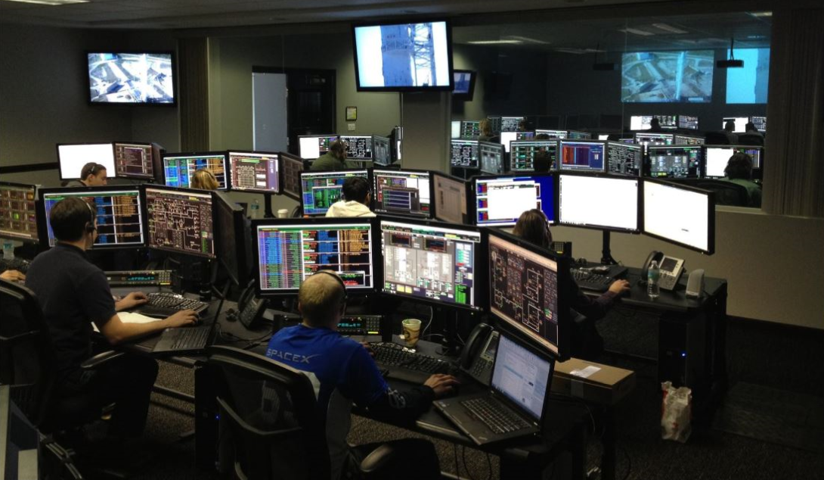
The core of the system captures and simplifies all the sensor data and displays it in a user-friendly view. A digital twin of devices is created.  Devices are mapped virtually to one another; creating the ability to automatically trigger backend processes. The health and status of these devices trigger alarms when events occur and reported back to the control room via a graphical user interface

Easy customizable SOPS (Standard Operating Procedures).  “IF THEN” Statements – eg 

IF

FIRE DETECTED

THEN

Launch and Focus nearest Camera >> Sound Audio Evacuation >> Unlock Nearest Door >> Home Lifts >> Automatically Notifiy Building Managers and Fire Department.

Convergence of IT and OT


For many people, information technology (IT) is basically synonymous with the team you call when you need help with a computer issue. One could classify IT as Computer Technology, Databases, Software Applications, Network Systems, to name a few. While that view of information technology isn’t totally wrong, it drastically understates the scope of critical functions within an organization.

Even though an organization’s IT department handles many different functions and plays a critical role in keeping things running. IT departments can automate and create processes for many of their daily tasks, so that the business continues to run smoothly. The ideal IT department is also aligned with the business’s goals and transparent in its processes in a way that the rest of the business can understand and provide input on.  Why then are organizations not focusing on integrating and automating process for their Operational Technologies (OT)?

Buildings, plants, and factories therefore need to become more intelligent. So what the is the answer? 

Convergence of Two Divisions

Connecting these two areas can benefit from each other’s experiences: OT can learn from IT, and vice versa.

Smart buildings are sometimes referred to as, automated buildings, or buildings that incorporate smart technology.  Interconnecting these technologies make buildings more intelligent and responsive, ultimately improving performance. Many buildings have systems that operate independently, and many are inherently inefficient as they lack the monitoring capability that would enable them to adapt effectively to different conditions or modes of operation.  Monitor, Record, Automatically Action and Report on the health of your buildings.
Security and Safety usually comprises video cameras, intercoms, access control, fire control, and mass notification. SmartX integrates all of these technologies.  The emphasis is moving away from security technology mainly as a forensic tool and moving toward improving detection, mitigation and response. At the center of this trend is PSIM (or Physical Security Information Management).